
A local digital service is a physical or online facility that enables residents to access administrative services in their municipality or intermunicipal authority. In France, public policy priorities have shifted in recent years: the challenge is no longer simply to open service counters, but to ensure high-quality support at every point of contact. This distinction changes how local authorities organize their digital and human resources.
Local coordination and human support: what makes a local service work
A local service model is about more than putting an online services portal in place. It relies on local coordination between staff, elected officials and service centers. At France Services centers, for example, a multi-skilled advisor directs residents to the right organization, whether the CAF, the CPAM or the tax authorities.
Human support remains the foundation of the system. A digital platform alone cannot resolve the difficulties faced by people with limited digital access or little confidence using online forms. Even occasional face-to-face assistance reduces the number of abandoned applications and limits data-entry errors that would otherwise add to the workload of the departments processing them.
Platforms specializing in local digital solutions make this coordination easier by offering local authorities tools tailored to their needs, as illustrated by https://www.e-citynet.com.
Protecting personal data in local authorities
Every digital administrative process generates personal data: civil status, income and family composition. Local authorities that roll out local digital services take on direct responsibility for protecting this information.
The CNIL has reiterated the specific obligations local authorities must meet when processing data. This regulatory framework requires concrete measures:
- Appoint a data protection officer (DPO) trained in local government issues and able to audit data flows between business software and citizen portals
- Establish encryption protocols for documents exchanged between residents and local government
- Prepare a continuity plan in the event of a cyberattack, including a procedure for notifying users whose data may have been compromised
Digital simplification creates a duty to protect data that many small municipalities struggle to meet due to a lack of in-house expertise. Intermunicipal resource-sharing and joint procurement help spread infrastructure costs, but they do not relieve each local authority of its own legal responsibilities.
Funding local digital services: a fragile lifeline
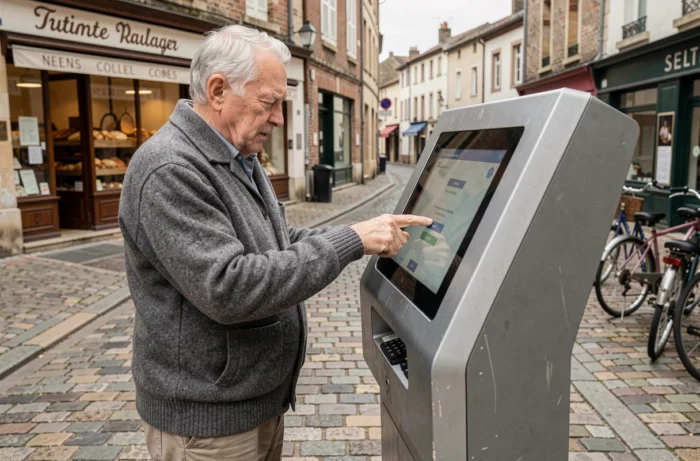
The France Relance recovery plan allocated 88 million euros to the digital transformation of local authorities in 2021. This funding helped equip town halls, install interactive kiosks and train staff. The question now is whether this funding can be sustained.
A parliamentary question to the government raised this specific issue: current funding does not guarantee long-term human support at local service centers. Advisor positions, often funded through subsidized employment contracts or temporary grants, disappear when the funding runs out.
Residents feel the impact directly. A France Services center that used to have two advisors may be left with just one, increasing waiting times. Rural municipalities, where use of these centers is growing, are the first to be affected by this budgetary uncertainty.
Resource management and municipal trade-offs
Local authorities must weigh the need to retain support staff against investment in new digital tools. An online request management system costs less than a full-time employee, but it cannot replace personal support for vulnerable groups. The challenge is to strike a balance between automating simple processes and preserving in-person services for complex situations.

Digital transformation for local government staff: training and business software
The digital transformation of local authorities affects more than their interactions with residents. It is reshaping the day-to-day work of local government staff. Managing leave, tracking technical work and processing incoming mail: tasks once handled on paper or in spreadsheets are moving to integrated software solutions.
This transition requires ongoing training for staff in digital tools. Resistance is not rooted in opposition in principle, but in a lack of support during the change process. Without appropriate training, an employee given new software will revert to their previous practices within weeks.
Local authorities that manage this transition successfully have one thing in common: they appoint internal digital champions—volunteer staff who receive priority training and then share best practices with their colleagues. This internal network reduces reliance on external providers and speeds up the adoption of new tools.
Making day-to-day work easier in local authorities depends less on the technological sophistication of the platforms they deploy than on three practical factors: stable funding for support positions, effective protection of personal data handled locally, and staff who can use their tools confidently. Even a high-performing digital portal is useless if no one is available to help residents who cannot use it.