A garment bought at a charity thrift store costs an average of 3.40 euros, compared with 9.40 euros on an online resale platform, according to Refashion’s 2025 review of the second-hand market. This price gap—nearly threefold—changes how you build a second-hand wardrobe for the whole family. But first, you need to know where to look, what to check and how to work out the true cost of a purchase, including delivery and alterations.
The true cost of a second-hand family wardrobe: beyond the price tag
The price of a second-hand garment goes beyond its price tag. For a family of four, the annual clothing budget covers dozens of items each season, especially when children outgrow their clothes every six months. To calculate the true cost of a second-hand purchase, add up three expenses: the price of the item, any delivery fees, and the cost of alterations or repairs.
At a charity shop or reuse centre, there are no delivery fees and prices per item remain very low. On resale platforms, you need to factor in shipping costs and sometimes a service fee. For five items bought online at 9 euros each, the total can easily exceed 45 euros once delivery is added, whereas the same items at a thrift store would have cost less than 20 euros.
The textile repair bonus also changes the equation. The scheme, supported by the Ministry for Ecological Transition, lets you have a garment or pair of shoes repaired by a Refashion-certified professional, with the discount deducted directly from the bill. A second-hand pair of jeans with a broken zip may still be a good buy if the repair cost, reduced by the bonus, is less than the price difference compared with a new budget pair.
Browse second-hand clothes at Family 2 Family to quickly compare prices on family clothing sorted by size and condition, making it easier to work out the cost before you buy.
When buying new at a low price costs less
A basic T-shirt sold for three euros at a supermarket won’t be beaten by a second-hand one costing five euros online, plus four euros for shipping. For very low-cost items (underwear, socks, white basics), discounted new clothing is often more economical than buying second-hand online.
The equation changes as you move upmarket: a branded coat, a formal dress or leather shoes can be found second-hand for a fraction of the new price, even after adding the cost of alterations.
Charity shops and reuse centres: the cheapest option for everyday purchases
Social and solidarity economy shops (Emmaüs, Oxfam, the Red Cross and local reuse centres) offer the lowest prices on the second-hand market. Refashion’s reported average of 3.40 euros per item reflects a model without the usual retail markup: the clothes are donated, and the proceeds fund social inclusion or charitable work.
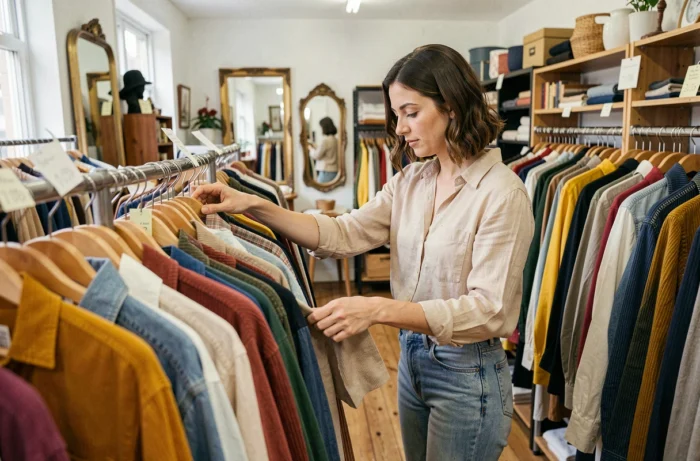
Shopping in person offers families a clear advantage: you can check the fabric, seams and actual fit before buying. Sizing varies from one brand to another, and a size 38 from ten years ago doesn’t always fit like a current size 38. For children’s clothes, checking items in person helps avoid returns and disappointment.
- Check the main seams (shoulders, inner leg and hems): a seam that is starting to come undone will need an extra repair.
- Test zips, snap fasteners and elastic, especially on children’s trousers and jackets, which are subject to repeated wear and tear.
- Check for set-in stains around the collar, underarms and cuffs—the areas that are hardest to clean.
- Measure the garment laid flat rather than relying on the size label, and compare it with something that already fits the person who will wear it.
Reuse centres regularly hold themed sales and seasonal clearance events. These are a great way to refresh the whole family’s wardrobe in a single trip, with even lower prices on end-of-season stock.
Online platforms and apps: finding specific branded items
Peer-to-peer resale platforms (Vinted, Vestiaire Collective, Leboncoin, Depop) are useful when you’re looking for a specific item: a particular size from a certain brand, a vintage style you’ve identified or a designer piece. Their catalogues, stocked by millions of sellers, are far larger than those of any physical thrift store.
Refashion’s reported average online price of 9.40 euros per item covers a wide range. Premium and luxury brands sell for much more, while clothes from high-street retailers can sometimes be found for two or three euros. Filtering by size, brand and condition saves time, but you’ll need to read descriptions carefully and ask the seller for extra photos.
Buying and reselling online works particularly well for fast-growing children. A jacket worn for three months by a four-year-old can be resold for almost what you paid for it second-hand, bringing the net cost down to just a few euros per item. However, this quick turnover means spending time listing items for sale and shipping them.
Flea markets, garage sales and local social media groups
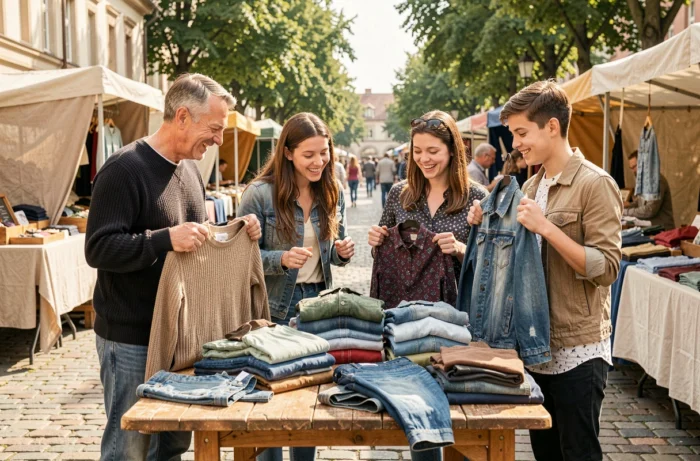
Flea markets and garage sales remain an underrated source of second-hand clothes, especially outside major cities. Prices are often negotiable, and family bundles (such as a bag of children’s clothes in the same size) sell for next to nothing.
Local Facebook groups for parents in the same neighbourhood or town offer a practical advantage: collecting in person eliminates shipping costs and lets you try items on before buying. These informal channels are a great complement to thrift stores for buying children’s clothes in bundles.
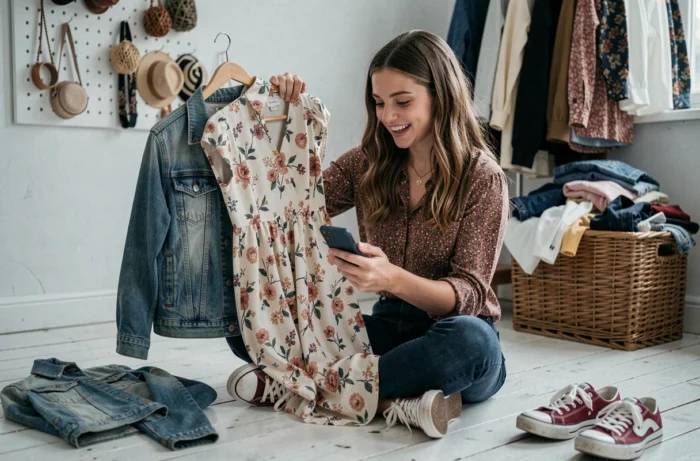
How to find trendy second-hand pieces without overpaying
Second-hand fashion isn’t limited to vintage finds or timeless basics. Trendy pieces from previous seasons appear on resale platforms just a few months after launch, often in excellent condition. Finding them takes a simple approach.
- Identify two or three current trends (colour, cut or pattern) by browsing shop windows or fashion accounts, then search for them on resale platforms using specific keywords.
- Choose brands with lasting build quality: a trendy garment that pills after two washes isn’t worth buying, even at a low price.
- Set up alerts on resale platforms to keep track of new listings, as branded items in good condition sell quickly.
Combining these options—thrift stores for basics, platforms for specific items and flea markets for children’s clothing bundles—makes it possible to build a varied, on-trend family wardrobe for far less than buying new. The time spent searching takes the place of a bigger budget, while carefully checking each item helps avoid unpleasant surprises.