Vanilla is one of the most sought-after souvenirs among visitors to Mauritius. Some of the vanilla sold on the island is grown locally, while some comes from Madagascar or other Indian Ocean countries. This distinction between Mauritian vanilla and vanilla simply sold in Mauritius affects the quality of the product you take home—and, above all, its price.
Mauritian-grown or imported vanilla: a common source of confusion at market stalls
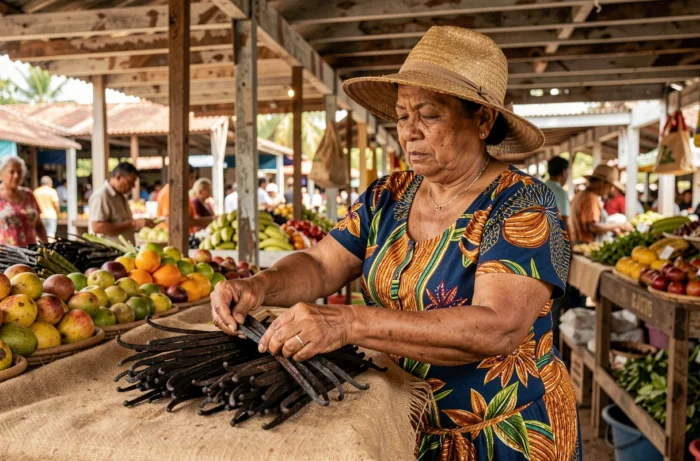
At markets and in some shops, pods sold as “Mauritian vanilla” have not always been grown on the island. Mauritius imports a significant quantity of raw vanilla, which is repackaged and resold to tourists. Asking the seller directly where the vanilla was grown and prepared is the only reliable way to tell the difference.
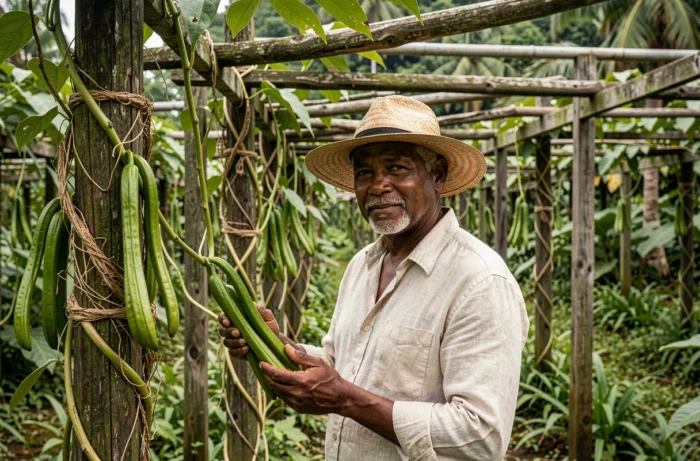
A useful way to guide your vanilla shopping in Mauritius is to choose places where you can see the production process, from vine to packaging. Plantations open to visitors let you check the product’s traceability for yourself—something you cannot do with a plastic-wrapped packet on a market stall.
Travelers on specialist forums have reported finding pods that had already been pressed to extract liquid vanilla, then rehydrated to make them look shiny again. These pods have no aroma left. The scam is hard to spot when the product is sold in a sealed packet that you cannot smell.
How to recognize a quality vanilla pod before you buy
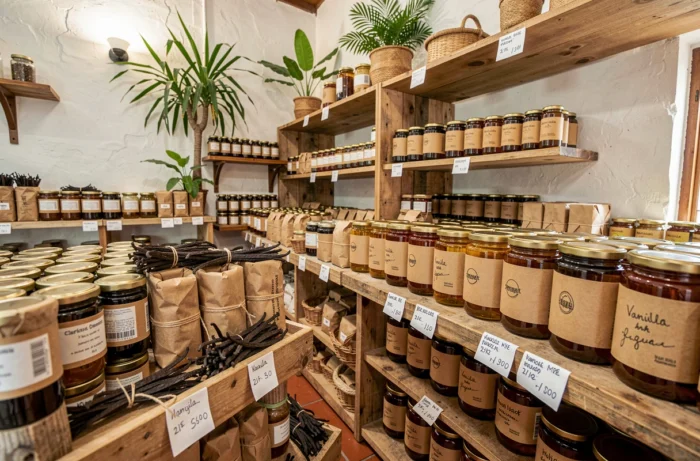
Buying directly from a producer or from a shop attached to a plantation makes all the difference. You can handle and smell the pod, and ask specific questions about the drying and curing methods.
Here are some practical points to check before buying:
- The pod should be pliable, not brittle or dry. If it cracks when touched, it has probably been stored poorly or for too long.
- You should be able to smell the aroma without opening the package if the pod is good quality. No scent at all through the packet is a warning sign.
- The surface should not show regular compression marks (roller marks), which indicate that the essential oil has already been extracted.
- A “organic” label displayed in a shop is only meaningful if it comes with verifiable certification. European rules require an inspection certificate for organic products imported from countries outside the EU.
Mauritian plantations and estates: what a visit offers
Several estates on the island open their vanilla plantations to visitors. Vanill’Art, located in the Hauts de Mont-Blanc, grows its vines in volcanic soil in a humid microclimate. The estate offers experiences ranging from group tours to workshops (spiced rum, a vanilla-themed lunch). Producers like this clearly identify their terroir and methods, allowing you to check the product’s traceability before buying.
Domaine de Saint Aubin, in the south of the island, combines sugar cane cultivation, rum production and vanilla growing. The visit offers more than just a chance to shop: it gives you an overview of the entire process, from hand-pollination to drying. For buyers, the advantage is understanding why local vanilla costs more than a pod bought at a market.
In both cases, plantation prices are often higher than those at urban markets. The difference reflects the product’s quality, as well as the fact that there is no middleman.
Local markets and shops: pitfalls to avoid in Port Louis and Mahébourg
Port Louis Central Market and Mahébourg Market feature in most guides as places to buy vanilla. The reality is more nuanced. These markets sell both local products and imported pods, and the distinction is not always clear to visitors.
In Mahébourg, travelers have reported finding odorless pods sold in opaque plastic bags, making it impossible to inspect them before buying. Ask to open the packet or smell the product before paying—a simple precaution many sellers will accept. A flat refusal should be a reason to move on to the next stall.
Shops near museums or tourist attractions (La Vanille Nature Park, for example) generally sell packaged products with more detailed labeling. Prices are higher, but the labels often state the exact origin of the pods, making it easier to choose.
Taking vanilla back to France: what the regulations say
Check phytosanitary restrictions
The French Ministry of Agriculture states that plants and plant products from countries outside the European Union are subject to restrictions. A phytosanitary certificate may be required. The official page does not specify which rules apply to each form of vanilla (whole pods, powder or liquid extract).
Before packing your suitcase, check the current rules for the exact form of the product to avoid an unpleasant surprise at customs. Liquid extract and whole pods may not be subject to the same rules.
Quantities and common sense
A few pods in your luggage for personal use generally do not cause any problems. Quantities that could suggest commercial use are more likely to attract the attention of customs officers. None of the official sources consulted specifies a precise weight limit for vanilla, so being sensible about how much you bring is more useful than trying to calculate an exact amount.
Quality Mauritian vanilla is recognizable by its pliability, strong aroma and transparent sourcing. Buying from a plantation rather than a tourist market is the most reliable way to take home an authentic product, provided you also check the import rules before returning.