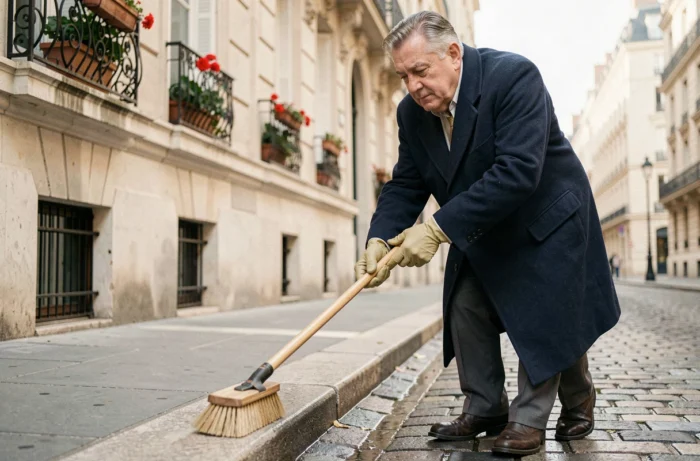
Sidewalk cleaning in Paris is a shared responsibility between the City and local residents. Who is responsible for sweeping, washing and weeding, and what rules apply? Requirements vary depending on the type of property occupied, the municipal regulations in force and even the weather. Understanding these factors can help you avoid penalties and reduce your liability in the event of an accident on a public thoroughfare.
Sweeping, washing and water restrictions: what each method involves in Paris
Cleaning a sidewalk involves more than just giving it a quick sweep. Two approaches are used, depending on the regulations in force at the time.
Dry sweeping remains the standard method throughout the year. It removes leaves, dust and small pieces of litter without using water. In apartment buildings, this is often done daily by a caretaker or a cleaning contractor.
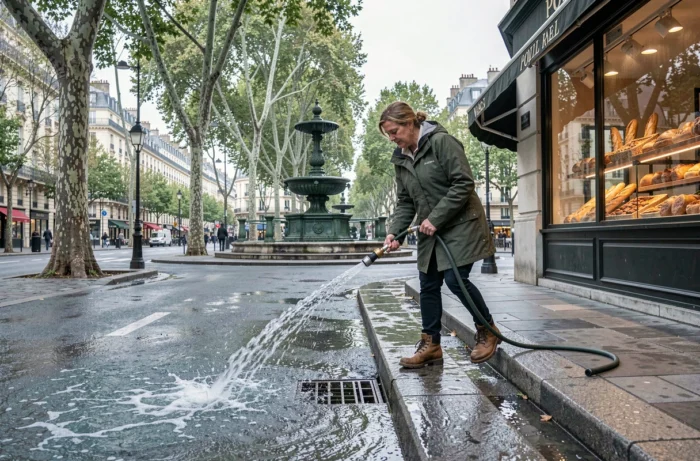
Hosing down sidewalks, however, can be an issue during periods of drought. An order published on July 11, 2025 for Paris and the inner suburbs recommended limiting street and sidewalk washing to what was strictly necessary for hygiene. Before using a hose, check the current prefectural measures and opt for mechanical or manual sweeping.
The maintenance requirements set out in Légifrance’s sidewalk maintenance guidelines remind residents that they must keep the pedestrian walkway in front of their property clean and safe, regardless of the method used.
| Method | Recommended frequency | Possible restrictions |
|---|---|---|
| Dry sweeping | Daily or weekly | None |
| Washing with water | Occasionally (for stains or soiling) | May be prohibited during a drought alert |
| Mechanical or thermal weeding | Seasonal | Chemical pesticides are prohibited for private individuals |
| Snow and ice removal / salting | As soon as snow begins to fall | None |
Residents’ responsibilities in Paris: houses, apartment buildings and condominiums
Parisian law requires occupants to clean the sidewalk in front of their property. The specific responsibilities vary depending on the type of building.
Detached house
The occupant (owner or tenant) is directly responsible for sweeping, weeding and clearing snow. Under municipal regulations, the adjacent gutter is generally included in the area to be maintained.
Apartment building
In a typical apartment building, the property manager arranges maintenance through the caretaker or a contractor. The cost is shared among the co-owners through general service charges. Tenants have no direct responsibility for maintaining the public thoroughfare unless the building’s rules state otherwise.
Horizontal condominium
Each unit often has its own street-facing frontage. Each co-owner maintains the sidewalk in front of their unit, unless the condominium rules provide for shared maintenance.
Fallen leaves, icy sidewalks and accidents: limits to liability
Liability when a pedestrian falls is a recurring issue every autumn and winter. An article published by Le Parisien on October 5, 2026, clarifies a point that is often misunderstood: the mere presence of leaves in front of a home is not enough to establish the resident’s liability.
For a court to find someone at fault, it generally has to be shown that the resident failed to meet a clearly defined local obligation and that this failure directly caused the accident. Case law therefore depends on the applicable municipal orders and the specific circumstances of the fall.
The same principle applies to clearing snow and salting sidewalks in winter. Failing to take any action after significant snowfall is more likely to expose a resident to liability than a delay of just a few hours.
- Check whether a municipal order requires snow to be cleared within a specific time after the snowfall ends
- Keep a record of the work carried out (time-stamped photos, receipts for salt or sand) in case of a dispute
- Do not block the gutter with cleared snow, as this could create a new hazard
Weeding Paris sidewalks: permitted methods and prohibited products
Maintenance also includes spontaneous vegetation growing between paving slabs or at the base of buildings. Since chemical pesticides were banned for private individuals, only mechanical or thermal methods are permitted.
Manual weeding with a knife or hoe is the simplest option for small areas. Thermal weeding with a gas burner is suitable for longer stretches. In either case, how often you need to weed depends on the season: two or three treatments between April and October are generally enough to keep a sidewalk clear.
Condominiums with green spaces at the base of the building must distinguish between maintaining the public sidewalk and maintaining private common areas. The sidewalk is subject to municipal requirements, while private planters and planted strips are governed by the condominium rules.
Penalties and reporting: what Paris regulations provide
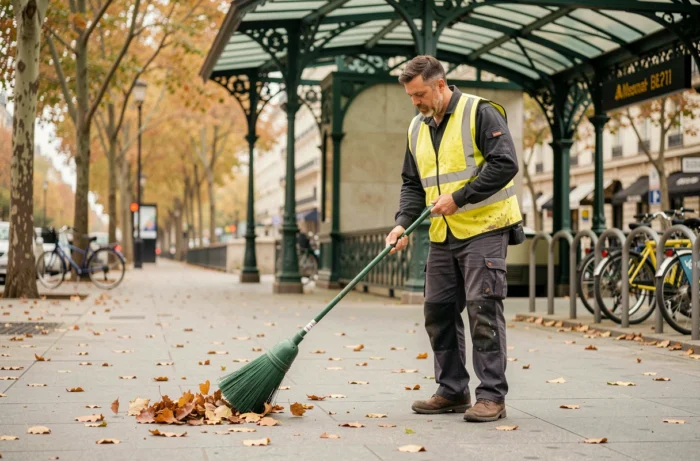
Failure to maintain a sidewalk can result in a fine. The amount varies depending on the offense, such as illegal dumping, obstructing the pedestrian walkway or failing to clear snow.
- Leaving bulky items on the sidewalk without first requesting their collection can result in a fine
- Leaving waste bins on the sidewalk outside collection times is a separate offense
- Parking a vehicle on the sidewalk, even outside your own home, is prohibited and may result in a ticket
To report a cleanliness issue on a public thoroughfare, the City of Paris provides the DansMaRue app. It lets users report problems (litter, graffiti and abandoned items) across all arrondissements and receive updates by email.
Sidewalk cleaning in Paris depends on a balance between public services and individual responsibility. The key point to remember is that the obligation falls on the occupant of the property, not the city hall, and cleaning methods must be adapted to any restrictions in force, particularly during periods of drought.