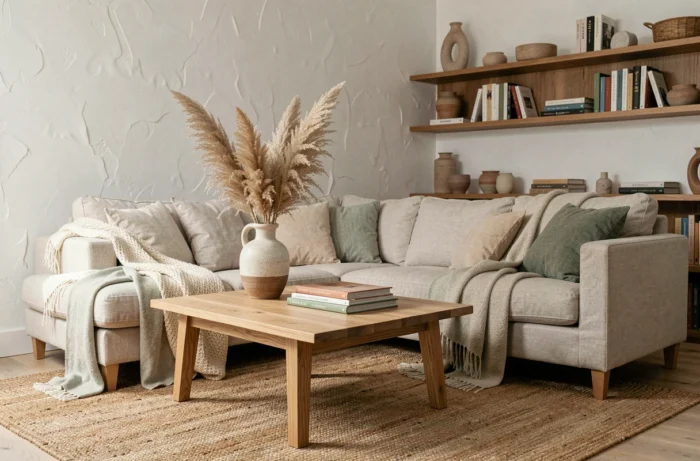
Interior design encompasses the choices of materials, colors, furniture, and layout that transform a living space into a place suited to a particular way of life.
Before thinking about style or trends, the first question to ask is how each room is actually used: how people move through it, how much time they spend there, and what activities take place. Starting with these practical considerations helps avoid ill-considered purchases and interiors that look like soulless catalog displays.
Reuse and durable furniture: an often-overlooked approach to interior design
The furniture reuse sector is becoming more established in France. ADEME documents an industry supported by extended producer responsibility schemes, with a growing network of reuse centers and local take-back programs. For interior design, this offers a practical option: instead of choosing between new furniture and hit-or-miss flea-market finds, reuse centers offer inspected and refurbished furniture.
Furniture sourced through these channels has two advantages. It costs less than new furniture, and its history gives it a distinctive character that mass production cannot replicate. A solid wood dresser from the 1960s, an industrial office chair, or a repurposed task lamp used as a living room light: these pieces give a space a sense of history that standardized furniture cannot provide.
Beyond appearance, choosing furniture for its repairability and ease of disassembly changes the way you buy. Furniture that can be taken apart adapts to a move, a change of room, or a growing family. This approach turns decorating into an evolving project rather than a fixed investment. To explore other approaches to furnishing a space, 100 000 Watts’ decorating ideas cover a range of styles to consider alongside your own practical needs.
Color palettes and natural light: two connected factors
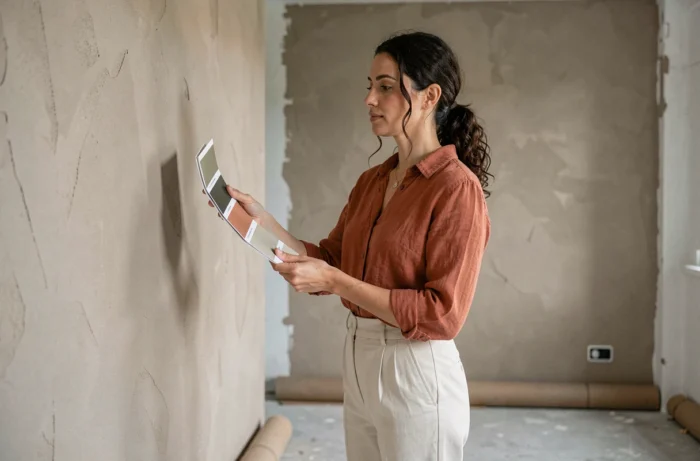
Wall color should not be chosen from a paint chart in isolation. It needs to be considered in relation to the light the room receives, which varies according to its orientation, the size of its windows, and external obstructions such as trees or neighboring buildings. The same shade can look cool in a north-facing room and warm in a space bathed in afternoon sunlight.
Before choosing a color, observe the room at three times of day: morning, mid-afternoon, and early evening. Take a photo each time. The difference in appearance across these three moments reveals the room’s true atmosphere far better than any sample viewed in a store.
Saturated colors or neutral tones: a practical choice
Saturated colors (terracotta, teal, forest green) make a room appear smaller. That is not necessarily a drawback: in a large living room that feels cold, a deep accent wall creates a focal point that brings the space together. In a smaller room, however, light, matte tones make it feel more spacious.
A common pitfall is using several bright colors on multiple walls at once. Limiting bold color to a single surface in each room is enough to add character without overwhelming the eye. Textiles, accessories, and furniture can bring the rest of the room together.
Materials and textures: what gives a space depth
An interior made from just one material (all wood, all metal, or all smooth fabric) can feel monotonous. A room gains depth when it combines contrasting textures. The principle is physical: different surfaces absorb and reflect light in different ways, creating visual richness without adding color.
- Crinkled linen on a sofa or curtains absorbs light and softens lines, making it a good choice for rooms where relaxation is a priority.
- Brushed metal or aged brass on a light fixture or table leg reflects light subtly and adds a graphic element to the space.
- Polished concrete or natural stone, used for a countertop or a feature wall, introduces a mineral quality that visually grounds the room.
- Unvarnished raw wood retains its variations in grain and develops a patina over time, giving a piece of furniture character beyond its original shape.
Combining two or three of these material types in the same room is enough to create tactile and visual contrast, avoiding a bland look without resorting to a clutter of decorative objects.
Reclaimed materials: check before installation
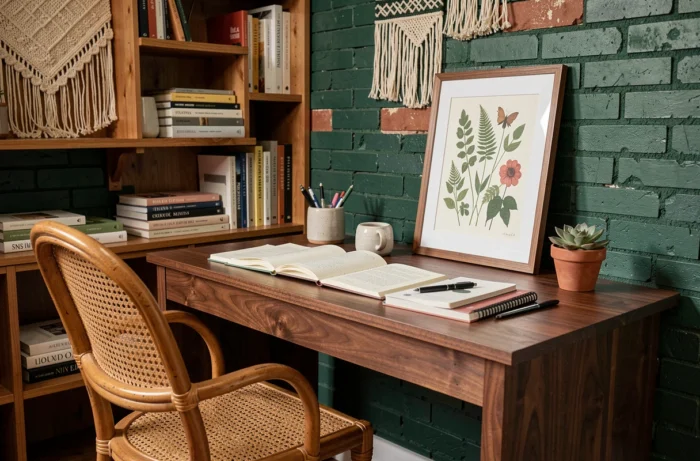
Salvaging old floorboards, cement tiles, or beams for a new design is an appealing idea. One important precaution: reclaimed materials may need a technical inspection before they can be reused.
Their strength, compatibility with the surface they will be installed on, and any old treatments they may contain (lead paint or fungicide, for example) should be assessed. A beautiful cement tile with a deep crack will not hold up as flooring, no matter how attractive it looks.
Living room layout: organize the space around how you really use it
The living room often serves several purposes: relaxing, reading, socializing, and sometimes dining or working from home. A common mistake is to arrange all the furniture around a single focal point—the TV—and overlook how people move through the room.
Drawing a scaled floor plan, even on paper, helps identify dead zones and narrow walkways before you buy or move anything. Keep a clear passage at least as wide as a person walking between each functional area.
For example, a sofa placed perpendicular to the wall can separate a reading nook from a dining area without the need for a partition. A narrow console behind the sofa creates an extra surface and defines the space without cluttering it. These layout solutions cost no more than the furniture you already have.
Interior design that stands the test of time depends less on a particular style than on a method: observe the light, check the materials, and plan the layout around how the space is used. A home that works well day to day will always end up being a home you find beautiful, because it reflects real habits rather than a borrowed image.