
In France, independent sports participation is growing as people move away from clubs’ fixed schedules. According to Insee, prices for recreational and sports services have risen in recent years, and a significant share of lower-income households say they cannot afford regular paid leisure activities. In this context, choosing a leisure activity is about more than browsing a list of ideas: it means balancing your interests, time constraints, actual budget and a sometimes limited local offering.
The total cost of a leisure activity: the factor we tend to underestimate
Most guides to choosing a leisure activity mention the budget in passing, as if the sign-up fee alone were enough to make a decision. The price advertised at the start of the season is only a fraction of the actual cost.
For a club sport, you need to add up the annual membership fee, initial equipment, replacements, travel and sometimes training camps or competitions. For a creative hobby such as ceramics or painting, the cost of consumable materials builds up over the months.
Comparing the total cost over six months reveals considerable differences between two activities that may seem similar at first. A “free” outdoor activity (running, hiking) still requires suitable shoes and time to travel to a pleasant route. Conversely, a monthly gym membership may include access to several activities, reducing the cost per activity you try.
The SRCV survey analyzed by Insee confirms that among people living below the poverty line over the long term, the cost of regular paid leisure activities remains a reported barrier. Assessing what you can afford over time, not just at sign-up, helps you avoid giving up an activity because of financial pressure rather than lack of interest.
Exploring leisure activities on C Fun lets you see the range of activities available and their price ranges before committing.

Try a leisure activity on a small scale before committing
Investing in an annual membership or expensive equipment before you have tried an activity is like buying a car without a test drive. Trial options are available, but they remain underused.
Trial sessions and introductory classes
Most sports clubs and creative workshops offer one to three free or discounted sessions at the start of the season. These sessions let you assess three things at once: how much you enjoy the activity, the group atmosphere and whether it fits your schedule.
A trial session tests not only the activity, but also the setting. A boxing class in a noisy gym 40 minutes away tells you something different from a class at a neighborhood club within walking distance.
Equipment loans and no-commitment options
Some organizations lend equipment to beginners, such as rackets, musical instruments and drawing supplies. This is worth looking out for, as it reduces the initial financial risk.
- Local associations often lend equipment for the first few weeks, giving you time to confirm your interest before buying anything.
- Monthly memberships with no long-term commitment (gyms, creative coworking spaces) let you try an activity for two or three months without signing up for a full year.
- Sports and music equipment rental platforms offer temporary access to gear you would not have bought just to try something out.
Trying an activity on a small scale does not mean you lack commitment. It is a way to protect your motivation: giving up a hobby after a major investment can make you feel guilty, whereas stopping a free trial simply lets you move on to something else.
Proximity and local access: practical filters often overlooked
An ideal leisure activity on paper can become a chore if getting there involves a long or complicated journey. Travel time is part of the time you spend on the activity.
An activity 45 minutes away by car, done twice a week, takes up three hours of travel each week. Over a month, that can add up to more time than the activity itself for some disciplines. The fatigue of commuting eventually wears away at your motivation, especially if you are juggling work and family responsibilities.
Independent activities are appealing precisely because they remove this constraint. Running, walking, drawing or playing an instrument at home does not depend on a schedule or a commute. For people whose routines vary from week to week, this flexibility can make the difference between sticking with a hobby and giving it up.
Before choosing an activity, checking what is available within a reasonable distance of your home or workplace is a simple and effective filter. A hobby you can reach on foot or by bike is statistically more likely to last than one that requires a car.
Routine and consistency: fit your leisure activity into your actual week
Clubs and associations operate on fixed schedules: Tuesday at 7 p.m., Saturday at 10 a.m. This works well for people with stable schedules. For those working irregular hours, variable part-time schedules or on-call shifts, a fixed time slot can become a source of frustration rather than enjoyment.
Distinguishing between two types of leisure activities can help you make a realistic choice:
- Scheduled activities (group classes, team sports, instructor-led workshops) require regular attendance and work best with a predictable schedule.
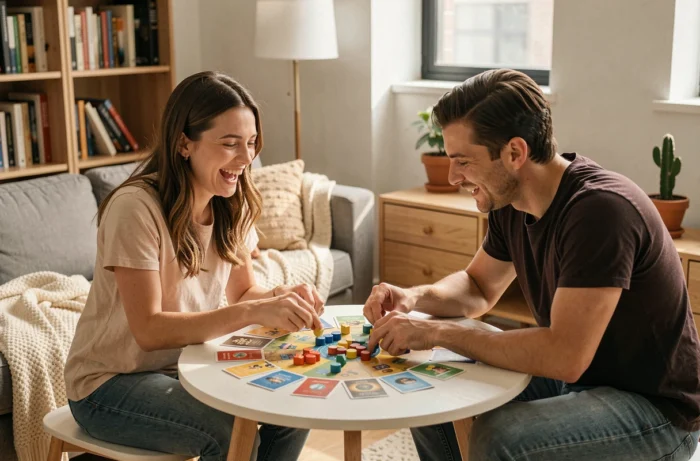
- Independent activities (reading, writing, running, games, gardening) fit into the time you have available without depending on a group or a set schedule.
- Hybrid options (open-access gyms, online class apps, informal practice groups) combine structure with scheduling flexibility.
Choosing an activity that fits your actual routine, rather than the ideal week you wish you had, is the best predictor of consistency. Doing an activity once a week for a year is more rewarding than taking up an ambitious hobby and giving it up after six weeks.
Choosing a leisure activity is best treated as a practical decision rather than a quest for self-discovery. Ongoing costs, distance, trial options and schedule compatibility: applying these four filters in that order rules out most unsuitable options and helps you find the ones you have a real chance of sticking with over time.