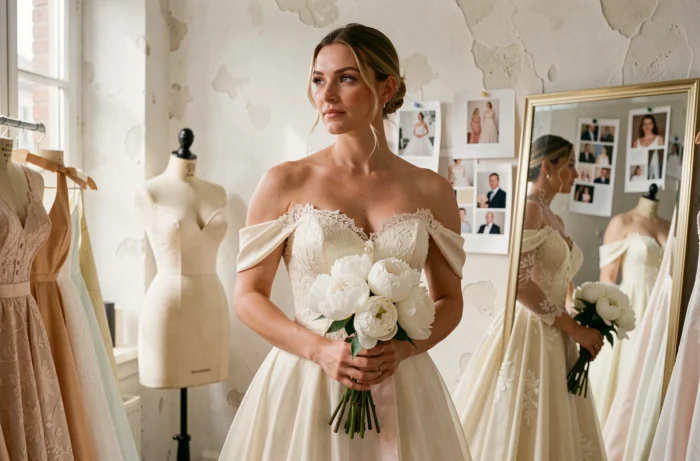
The collections showcased during the Spring-Summer 2026 Bridal Fashion Week in New York have redefined wedding dress codes, while new European regulations are changing how bridal fashion brands communicate their environmental commitments. These two parallel movements are reshaping the landscape for future brides preparing for their ceremony.
Textile Regulation and Bridal Fashion: What Changes in 2026
Most articles dedicated to wedding trends focus on silhouettes and accessories. They overlook a change that directly affects the choice of a wedding dress: the European regulatory framework on environmental claims.
The European directive 2024/825, applicable from September 27, 2026, governs generic environmental claims. For a wedding dress brand, phrases like “eco-friendly” or “green collection” become risky if not supported by verifiable data. Vague mentions of a dress’s ecological impact become legally contestable.
In parallel, starting October 1, 2026, a third party (distributor, association, competitor) can calculate and publish the environmental cost of a garment based on available data, even if the brand has not displayed it themselves. The Ecobalyse score, initially designed for mainstream ready-to-wear, also applies to ceremonial outfits. For those wishing to check the news on Eleganzia, these regulatory developments are among the topics closely monitored by specialized media.
The European Union is also establishing specific financial responsibility for textile waste, with the possibility of adjusting contributions based on certain practices associated with fast fashion. Designers positioned in the high-end bridal market see this as a differentiation lever.
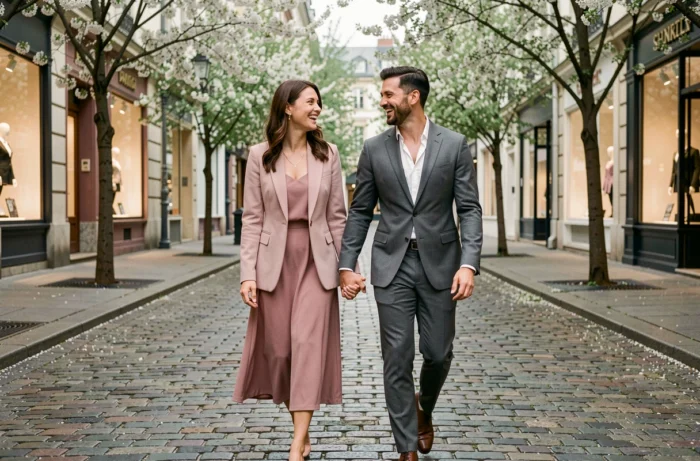
Bridal Dress Trends 2026: Fringes, Pantsuits, and Retro Accessories
The New York Bridal Fashion Week runways highlighted several aesthetic directions. Rather than listing them all, let’s focus the analysis on the three movements that mark a break from previous seasons.
| Trend | Main Feature | Positioning Compared to 2025 |
|---|---|---|
| Fringe Dress | Movement and texture, inspired by the 1920s | Almost absent from the 2025 collections |
| White Pantsuit | Alternative to the traditional dress | On the rise for two seasons |
| Retro Accessories | Headbands, brooches, long gloves replace the classic veil | Notable new trend for 2026 |
The fringe wedding dress is the surprise of the New York shows. Inspired by the 1920s, these models play with movement and texture, creating a kinetic effect on the silhouette that contrasts with traditional embroidery.
The white pantsuit is establishing itself as a credible alternative to the dress. This trend goes beyond mere fashion effect: the pantsuit represents a choice of comfort and reusability after the ceremony, an argument that resonates with the environmental concerns mentioned earlier.
On the accessory side, veils are giving way to retro-inspired pieces. Ornate headbands, vintage brooches, long gloves: these elements allow for personalizing an outfit without multiplying new purchases.
Wedding Jewelry: Beyond the Rings
Wedding rings remain the central symbol, but the 2026 collections are expanding the palette of jewelry worn on the day of the ceremony. Several categories are emerging in the recommendations of bridal stylists:
- Dangling earrings matching the style of the dress, replacing traditional discreet studs
- Wrist bracelets in worked metal, worn on short sleeves or strapless dresses
- Back jewelry (fine chains connecting the necklace to the back neckline), particularly suited for backless dresses
The bridal jewelry is becoming a style element in its own right, not just an accessory. This evolution is partly explained by the resale market: a quality piece of jewelry retains its value and can be worn after the wedding, unlike some single-use accessories.
Eco-Responsible Weddings and Second-Hand Bridal Fashion
The second-hand wedding dress market is gradually structuring itself. The second-hand wedding dress is gaining legitimacy in a context where regulations push consumers to question the lifecycle of a garment worn only once.
Guides specializing in eco-responsible weddings now recommend checking three points before purchasing a new dress:
- The traceability of the fabrics used, verifiable through environmental display data
- The possibility of reselling or transforming the dress after the ceremony
- The absence of unsupported environmental claims on the label or the brand’s website
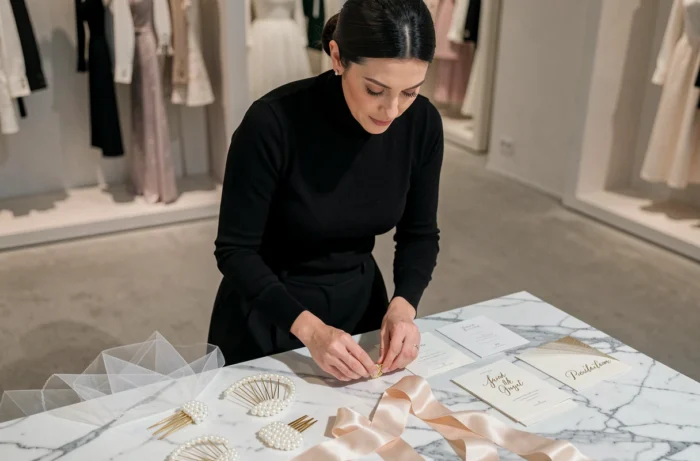
Fashion and Weddings in 2026: Environmental Data as a Selection Criterion
The intersection of aesthetic trends and regulatory framework is redefining the selection criteria for a wedding outfit. Future brides are no longer choosing solely based on cut or fabric: the displayed environmental cost is becoming a measurable decision parameter.
Brands that anticipate this evolution are voluntarily publishing their environmental scores, transforming a regulatory constraint into a commercial argument. Those that delay risk having a third party publish this data on their behalf, sometimes in a less favorable context.
The 2026 wedding season is thus distinguished by this dual reading: on one side, a return to expressive aesthetics (fringes, retro accessories, bold jewelry); on the other, a growing demand for transparency regarding the actual impact of each piece worn on the big day.