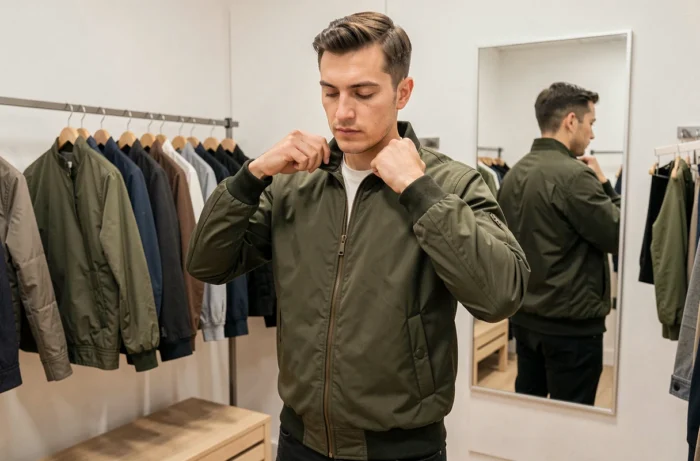
When ordering a jacket online, you rely on your usual size, and upon receipt, the sleeves stop above the wrists or the fabric gapes under the arms. The problem rarely comes from the size chart, but from how you take your measurements and what you do with them afterward. Choosing the right jacket size depends on three simple steps, provided you execute them correctly.
Why your usual jacket size doesn’t work every time
A “M” or a “50” does not indicate the same cut depending on the brand or model. Size charts are based on combinations of measurements (chest, waist, sometimes arm length) whose ranges vary from one manufacturer to another. Comparing your measurements to the specific model guide remains the only reliable method.
We all have the reflex to transpose the size of an old jacket onto a new one. This shortcut works within the same range, from the same manufacturer. As soon as you change brands, materials (leather, textile, softshell), or cuts (fitted, touring, sporty), the benchmarks shift. A fitted leather jacket often requires going up a size compared to a lined textile one. Consulting a jacket size guide dedicated to the targeted model avoids this type of unpleasant surprise.
Three measurements to take to choose your jacket size
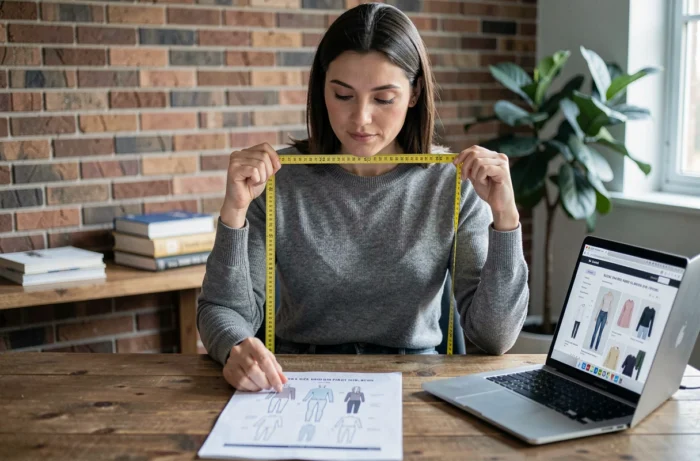
Before opening any size chart, you need a flexible measuring tape and someone to check the positioning. Taking your measurements alone almost always skews the chest measurement because you tend to pull the tape too tight or let it ride up your back.
Chest measurement: the reference measurement
Place the measuring tape horizontally, passing under the armpits and across the widest part of the chest. Breathe normally, without puffing out your chest or sucking in your stomach. The tape should be in contact with the body without compressing the skin.
Waist measurement and sleeve length
The waist measurement is taken at the narrowest point of the abdomen, not at the level of the pants waistband. For sleeve length, start from the top of the shoulder (the protruding bone) to the wrist, with the arm slightly bent. This slight bend simulates the natural posture you adopt when wearing the jacket.
These three measurements are sufficient for most urban jackets, leather and textile. For a motorcycle jacket, a fourth measurement comes into play: the back length, measured from the nape of the neck to the waistband, which determines the placement of back protections.
Motorcycle jacket: check the placement of protections, not just the size
A motorcycle jacket that displays the correct size on the label can pose a safety issue if the armor does not fall in the right place. The shoulder and elbow protections must remain in front of the joints when you are in a riding position, arms extended forward as if on handlebars.
A sleeve that appears correct while standing may ride up once seated on the motorcycle. This is why trying it on while standing is not enough. Reproduce the riding position: arms forward, torso slightly bent. If the elbow armor slides toward the forearm or if the shoulder protection drops onto the bicep, the size or cut is not suitable.
- Shoulder armor: it should cover the rounded part of the joint without extending onto the arm, even with arms extended.
- Elbow armor: in the riding position, the protection should remain centered on the elbow tip, not shifted toward the wrist.
- Back protector: if the jacket includes one, it should cover the spine from the upper back to the lower back without riding up above the nape when leaning forward.
The EN 17092 standard classifies motorcycle clothing by level of protection (A, AA, AAA), but it does not provide information on the level of the armor itself, which falls under the EN 1621 standard. An AA-rated jacket does not automatically guarantee high-end armor: you need to read the labels of the garment and the protections separately.
Fitting the jacket: concrete check points
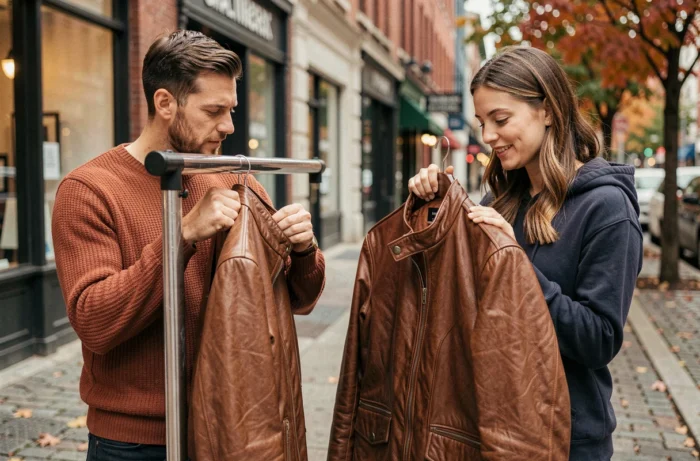
Once the jacket is on, check five areas in less than a minute.
- Shoulders: the shoulder seam should fall right on the bone. If too loose, the jacket floats and the protections slide. If too tight, the fabric pulls when you raise your arms.
- Closure: the zipper closes effortlessly and does not create diagonal folds on the chest. Folds indicate that the chest measurement is too tight.
- Sleeves: with arms at your sides, the sleeve should reach the wrist. When you bend your elbow at a right angle, it should not ride up above the wrist.
- Back: lean forward. The bottom of the jacket should not rise above the waistband. If it does, the back is too short.
- Ease: cross your arms in front of you. If the fabric pulls to the point of limiting movement, it’s better to move up to the next size than to force the fit.
For a leather jacket, keep in mind that the material will stretch slightly over time. A snug fit at purchase is normal. However, a synthetic textile does not stretch much: the size worn on the first day will be the final size.
Jacket size between two measurements: go up or down
When the chest measurement falls between two sizes on the manufacturer’s chart, the choice depends on usage. For a jacket worn over a thick sweater or a heated vest, go up. For a mid-season jacket worn over a t-shirt, you can stay with the smaller size if the difference with the larger size is slight.
Sleeve lengths can vary from one size to another without the chest measurement changing proportionally. In some sporty cuts, going up a size lengthens the torso more than the sleeves. This is a parameter that size charts do not always show, and it justifies checking multiple measurements rather than just the chest.
Taking three minutes with a measuring tape, comparing your numbers to the guide of the targeted model, and reproducing your actual usage posture during fitting: these steps significantly reduce the risk of returns. The well-fitted jacket is the one you forget once worn.