Comparing scented candles often comes down to matching fragrance notes and container designs. Scent remains the main purchase driver, but it tells you nothing about what happens once the wick is lit: burn quality, compounds released into indoor air, or label compliance. This article compares brands on criteria that are rarely considered side by side.
Burning and emissions: what the wax alone can’t predict
A common instinct is to choose a so-called natural wax (soy, rapeseed, beeswax), assuming it pollutes less than paraffin. Available analyses don’t support this shortcut. Emissions also depend on the wick, fragrance formulation, and burning conditions.
A test-chamber study of 24 scented and unscented candles found that scented candles release additional compounds associated with their fragrance. Estimated concentrations in residential rooms were generally below guideline values, with some exceptions for certain pollutants.
In practice, this means that two soy candles sold at the same price can produce very different emission profiles depending on the fragrance load and wick type. To identify the best scented candle brands, look beyond the “plant-based wax” claim on the packaging.

Scented candle comparison criteria: summary table
The table below brings together the criteria that help distinguish brands on practical grounds, not just sensory appeal.
| Criterion | What to check | Why it matters |
|---|---|---|
| Wax type | Soy, rapeseed, paraffin, or a blend | A wax-paraffin blend isn’t “natural,” even if the marketing suggests otherwise |
| Wick | Cotton, wood, or a wick with a metal core | A wick that’s unsuitable for the container’s diameter can cause uneven burning and more soot |
| CLP label | Pictograms, hazard statements, and allergen list | The CLP Regulation may require pictograms depending on the candle’s classification |
| Fragrance load | Whether the percentage is disclosed | A higher fragrance load increases emissions of volatile compounds |
| Pre-purchase information online | Manufacturer details, warnings, and composition available before purchase | Since 13 December 2024, the EU General Product Safety Regulation has required this information for online sales |
Label compliance is a practical comparison criterion beyond fragrance and container design. A warning about certain allergens may be required, and its absence from an online product listing is a red flag since the EU regulation came into force.
Label transparency: differences between artisan brands and luxury houses
Major houses (Diptyque, Byredo, Cire Trudon) generally display the required information on their websites, if only because their distribution networks require it. The physical label includes the CLP classification where applicable.
Among artisan brands sold exclusively online, the picture is more mixed. Some product listings don’t specify the wax type, whether allergens are present, or the country of manufacture. Failing to provide pre-purchase information is now a regulatory breach, not merely a lack of commercial transparency.
Three quick checks are enough to assess a brand before buying:
- Does the product listing specify the wax type and fragrance percentage, or does it offer only scent descriptions?
- Are the CLP pictograms and allergen list visible before you add the candle to your basket?
- Is the name and address of the manufacturer or the person responsible for placing the product on the market shown somewhere on the page?
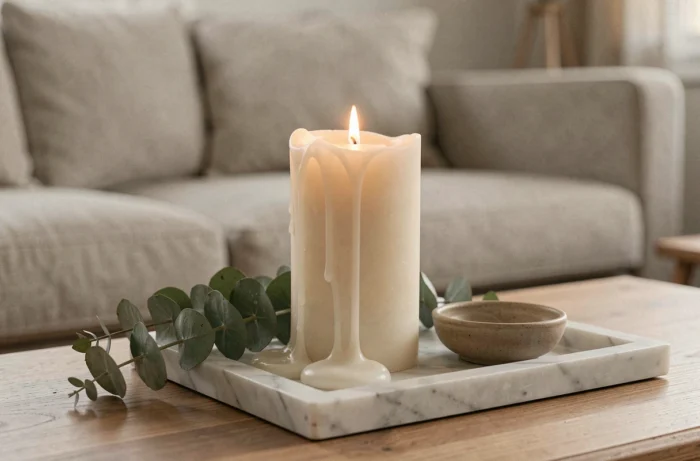
How you use a candle matters as much as which brand you choose
Santé.fr recommends limiting how often you use candles, not burning several at once, avoiding use around people who are sensitive (such as people with asthma and young children), and airing out the room thoroughly after burning. These recommendations concern how candles are used, not how brands are ranked.
In practical terms, a premium candle burned for several hours in a closed room creates greater exposure than a budget candle used occasionally in a well-ventilated living room. The conditions of use affect exposure just as much as product quality.
Two habits can make a significant difference:
- Trim the wick to about five millimetres before each use to reduce soot and keep the flame steady
- Keep burning sessions short to prevent the wax from overheating, which accelerates the release of volatile compounds
- Air out the room after extinguishing the candle, even if the lingering scent is pleasant
Luxury or artisan scented candles: where does the real difference in quality lie?
The price of a luxury candle includes its container (blown glass, ceramic, brass), branding, and distribution. That doesn’t guarantee a better burn. Some artisan brands producing small batches with single-ingredient waxes and properly sized cotton wicks achieve a more even burn than products sold for three times the price.
Price reflects positioning more than any measurable difference in burn quality. The real differentiator is the care taken with the formulation: the wax-to-fragrance ratio, the choice of wick for the container’s diameter, and transparency about the ingredients.
A brand that publishes its fragrance percentage, specifies the origin of its wax, and displays its CLP information offers more reassurance than one that relies solely on scent-focused storytelling. The label is the only document you can verify before the first burn.
When choosing a scented candle, it’s worth giving the label, usage conditions, and wick quality as much consideration as the fragrance itself. Brands that make this information readily available, both in-store and online, are the ones that enable genuinely informed purchases.